
Understanding Agentic Marketing: The Impact of AI Agents on Digital Advertising Strategies in 2026
Digital marketing is evolving rapidly, and agentic marketing is at the forefront of this change. By 2026, AI agents will reshape how consumers discover, compare, and choose businesses online. This shift will affect everything from search engines to paid advertising, making it essential for business owners to understand what agentic marketing means and how to adapt.
This article explains agentic marketing in simple terms, highlights the differences between AI agents and traditional AI tools, and explores the implications for SEO, AEO, GEO, and paid advertising. You will also find practical advice on preparing your website and marketing strategies for this new era.
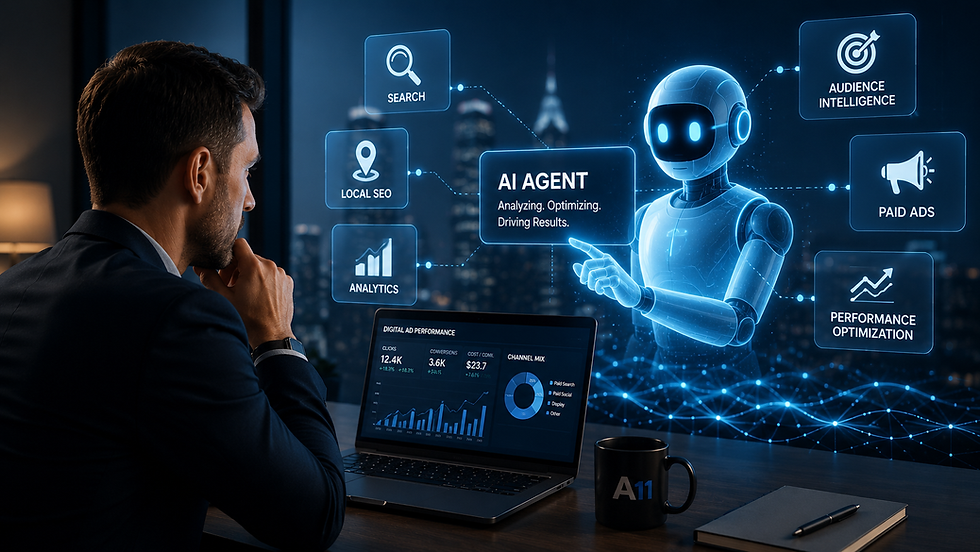
What Agentic Marketing Means
Agentic marketing refers to the use of autonomous AI agents that actively make decisions and take actions on behalf of consumers during their buying journey. Unlike traditional marketing tools that provide data or suggestions, AI agents can:
Search for products or services based on user preferences
Compare options across multiple businesses
Make recommendations or even complete purchases
This approach changes the role of consumers from passive searchers to active participants guided by intelligent agents that understand their needs deeply.
How AI Agents Differ from Traditional AI Tools
Traditional AI tools in marketing often assist businesses by analyzing data or automating tasks. Examples include chatbots, recommendation engines, or analytics dashboards. These tools require human input to act.
AI agents, by contrast, operate with more independence. They can:
Initiate searches without explicit commands
Evaluate multiple sources of information simultaneously
Learn from user behavior to improve future decisions
This autonomy allows AI agents to influence consumer choices more directly, making marketing strategies more complex and nuanced.
How AI Agents Will Change Google Search and Advertising
Google Search is evolving to integrate AI agents that provide personalized, agent-driven results. Instead of showing a list of links, search engines will offer curated options based on AI agents’ evaluations.
This means:
Search results will prioritize businesses with strong, structured data and clear authority
Ads will become more targeted, appearing only when AI agents identify a perfect match for user needs
Traditional keyword-based SEO will shift towards optimizing for AI agent preferences and behaviors
Businesses that adapt early will gain visibility in this new search landscape.
How AI Agents Choose Businesses, Products, and Services
AI agents rely on multiple factors to select the best options for consumers:
Structured business data: Clear, standardized information about products, services, pricing, and availability
Brand authority: Trust signals such as reviews, ratings, and reputation
User preferences: Past behavior, stated interests, and contextual data like location or device
Performance metrics: Delivery speed, customer service quality, and return policies
By combining these elements, AI agents can make smarter, faster decisions that benefit consumers and businesses alike.
Why Structured Business Data and Strong Brand Authority Matter
Structured data is a way of organizing information on your website so AI agents and search engines can easily understand it. Examples include schema markup for:
Business name, address, and phone number (NAP)
Product details like price, availability, and reviews
Service descriptions and categories
Strong brand authority builds trust, which AI agents weigh heavily. Positive reviews, consistent branding, and active engagement improve your chances of being chosen.
How Websites Should Prepare for AI Agents
To get ready for agentic marketing, websites should:
Implement comprehensive structured data using schema.org standards
Ensure accurate, up-to-date business information across all platforms
Build a strong reputation through customer reviews and testimonials
Optimize for mobile and fast loading speeds
Create clear, helpful content that answers common consumer questions
These steps help AI agents find and favor your business when making recommendations.
SEO, AEO, and GEO Implications
Agentic marketing affects three key areas:
SEO (Search Engine Optimization): Focus shifts from keywords to data quality, user experience, and authority signals.
AEO (Answer Engine Optimization): Content must be structured to provide direct answers that AI agents can use.
GEO (Geographic Optimization): Location data becomes critical as AI agents tailor recommendations based on proximity and local relevance.
Businesses should align their strategies with these trends to maintain and grow their online presence.
How Paid Advertising Is Evolving for AI-Driven Search
Paid ads will become more precise and context-driven. AI agents will:
Filter ads to show only those that match user intent and preferences
Negotiate bids dynamically based on predicted conversion likelihood
Integrate ads seamlessly into search results and voice assistants
Advertisers will need to focus on relevance, quality, and data transparency to succeed.
What Businesses Should Do Now
To thrive in agentic marketing:
Audit your website’s structured data and fix gaps
Encourage and manage customer reviews actively
Invest in building brand authority through consistent messaging and quality service
Explore AI-powered tools to understand consumer behavior better
Partner with experts like Agency Eleven’s SEO Services and Digital Marketing Services to stay ahead
Common Mistakes to Avoid
Avoid these pitfalls when adapting to agentic marketing:
Ignoring structured data or using it incorrectly
Relying solely on traditional keyword SEO without updating for AI agents
Neglecting local SEO and geographic signals
Overlooking the importance of genuine customer feedback
Failing to monitor AI-driven ad performance and adjust strategies
Frequently Asked Questions About Agentic Marketing
What is agentic marketing?
Agentic marketing uses autonomous AI agents to help consumers find and choose products or services, making marketing more interactive and personalized.
How do AI agents differ from regular AI tools?
AI agents act independently to search, compare, and decide, while traditional AI tools assist humans without full autonomy.
Will AI agents replace Google Search?
AI agents will transform search by providing curated, personalized results, but they will work alongside traditional search features.
Why is structured data important for agentic marketing?
Structured data helps AI agents understand your business details clearly, increasing your chances of being recommended.
How can businesses improve brand authority for AI agents?
Focus on collecting positive reviews, maintaining consistent branding, and delivering excellent customer experiences.
What changes should I make to my SEO strategy?
Shift focus to data quality, user experience, and local relevance while optimizing content for direct answers.
How will paid advertising change with AI agents?
Ads will become more targeted and context-aware, requiring advertisers to focus on relevance and transparency.
Agentic marketing is reshaping digital advertising by empowering AI agents to guide consumer decisions. Businesses that embrace structured data, build strong brand authority, and adapt their SEO and advertising strategies will gain a competitive edge.
To prepare your business for this future, explore Agency Eleven’s Elevate Ads and Elevate Intel services. For expert guidance, visit our Homepage, check out our Blog, or get in touch through our Contact page. Take the next step to future-proof your marketing today.


Comments